METYCLE · B2B · 2023 to present
Turning a stalled marketplace into the trading platform METYCLE runs on today
I designed the internal trading platform that got METYCLE's traders out of their spreadsheets and into one shared tool. It's now where the company's deals live. To get there, I first had to convince the team to shift focus away from the product I'd spent 18 months building.
At a glance
The problem
18 months of marketplace work, and users kept routing around it to reach our traders. The traders, meanwhile, were running six-figure deals out of personal spreadsheets.
The move
I used the adoption data to make the case for a pivot: stop trying to replace the trader, equip the trader. Then I designed the platform they now work in.
The proof
All six traders moved their active deals into one shared platform, and the rollout stuck where a previous attempt with Pipedrive had quietly died.
The setup
METYCLE is a B2B marketplace for secondary metals, connecting scrap sellers in Europe with buyers around the world. Deals are big. Six figures is normal. And the industry runs on relationships that took years to build.
When I joined after the Series A, the strategy was a self-service marketplace: sellers list material, buyers browse and transact, software in the middle. I spent 18 months designing exactly that.
It worked as intended, and almost nobody used it.
What zero adoption was telling us
The engagement data said the same thing for 18 months, and it took a while to admit what it meant. Users understood the marketplace fine. They onboarded, looked around, created a listing or two, then went back to WhatsApp. Sellers wanted a person who knew the market, could vouch for the buyer, and would pick up the phone when a shipment went sideways.
We tried one more iteration: a public marketplace with bidding, the closest thing to a self-service loop we could ship. Traffic improved. Then we looked at what bidders did after placing a bid. They asked to speak to a trader.
The product wasn't a failed marketplace. It was a fancy contact form for the human relationship users actually wanted. In this industry, the trader was the product all along.
Saying this out loud was uncomfortable, because it meant telling leadership that the thing I'd personally designed for a year and a half shouldn't be the priority anymore. I made the case anyway, with the behavioral data to back it up: don't try to replace the trader, equip the trader. Leadership agreed, and the roadmap changed.
The internal trading platform
Traders were running six-figure deals across personal spreadsheets, email, and memory. Leadership had already tried to fix this once with Pipedrive, and the rollout died quietly, because a CRM has its own idea of how deals work, and it wasn't the traders' idea.
So I started from the other end. I mapped how deals actually move, across roles, states, and dependencies. Then I built working prototypes in Lovable and sat with traders while they ran real deal scenarios through them, fixing things between sessions. By the time engineering picked it up, the workflows had already survived contact with the people who'd use them every day.
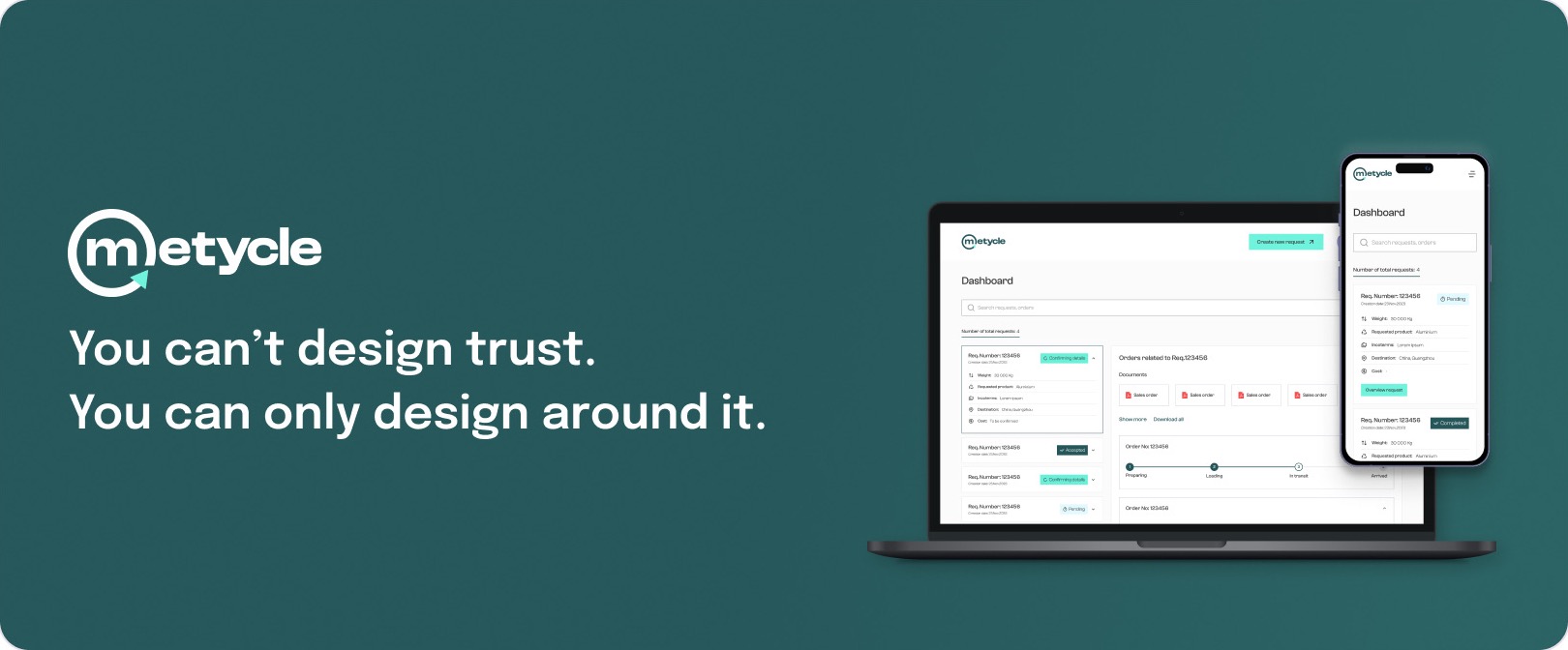
The result is the tool every trader now works in: one shared view of every in-flight deal, its status, its documents, its owner.
A trader's day, before and after
Start the day
Open WhatsApp, nine threads, then a personal spreadsheet to remember where every deal stands. The whole deal book lived in one head.
Open the platform and see every in-flight deal, its status, documents, and owner in one view. WhatsApp stays for what it's good at.
Track a deal
Information scattered across a spreadsheet, an inbox, and memory, with columns that meant different things to different traders. One sick day and a deal stalls.
Deals move through defined states that match how deals actually work, because traders tested them live before engineering built anything.
Coordinate with the team
Ops asked traders, traders checked spreadsheets. Every status update was a conversation.
One source of truth. Questions that used to need a phone call answer themselves.
Handle a deal going sideways
Dig through email threads and chat history to reconstruct what was agreed, then get on the phone.
Documents and history live on the deal itself. The trader picks up the phone with the full picture already open.
Grow the business
More deals meant more spreadsheets, more memory, more risk. The trader's workflow was the ceiling on growth.
Traders scale with tooling, and the company is built around what they do best.
The repositioning
A strategy pivot that stays internal isn't finished. I led the redesign of the marketing site so the public story matched the real one: human-led trading, backed by software. Interactive prototypes got founders and sales aligned on the new positioning before any code existed, which made the arguments cheap.
Outcomes
- All six internal traders now run their active deals in the platform instead of personal spreadsheets, with one shared view of every in-flight deal.
- The company dropped the paid third-party tools it had been using to track deals, Pipedrive among them, which traders hardly ever opened. One internal tool replaced that whole stack, cutting the tooling spend along with it.
- The rollout stuck where Pipedrive had quietly died, because workflows were tested live with traders before engineering built anything.
- Ops and traders work from the same deal state, so status updates no longer need a conversation.
- I made the case that shifted company strategy from self-service marketplace to human-led trading, then led the marketing site redesign that announced it.
- Leadership now signs off on working prototypes instead of static screens, moving expensive decisions to before the build instead of during it.
Zero adoption isn't always a design failure. Sometimes it's the most expensive user research you'll ever run. Those 18 months produced the one thing nobody could argue with: consistent evidence of what users actually wanted. My job was to stop defending what I'd built and pay attention to what its failure was saying.
If I got this brief again today, I wouldn't start with a dashboard. I'd start by mapping how trust flows through the business: who people rely on, when they need reassurance, and where digital tools can support those moments instead of trying to replace them.
Let's talk
I'm looking for my next full-time product design role. Tell me about the team and the problems you're working on.