
Buying a car is not a casual decision. Most users arriving on Heycar’s homepage already know what they are looking for. They have a make in mind, a model they prefer, and a location where they want to buy.
Yet when we looked at the homepage data, something felt off.
Users were arriving with intent but leaving without taking action. The search box, designed to help users refine their preferences, was instead slowing them down. Instead of moving forward, many were hesitating.
That hesitation became our starting point.
Research
Wireframe
User Flow
User Personas
UI/UX Design
Figma
Miro
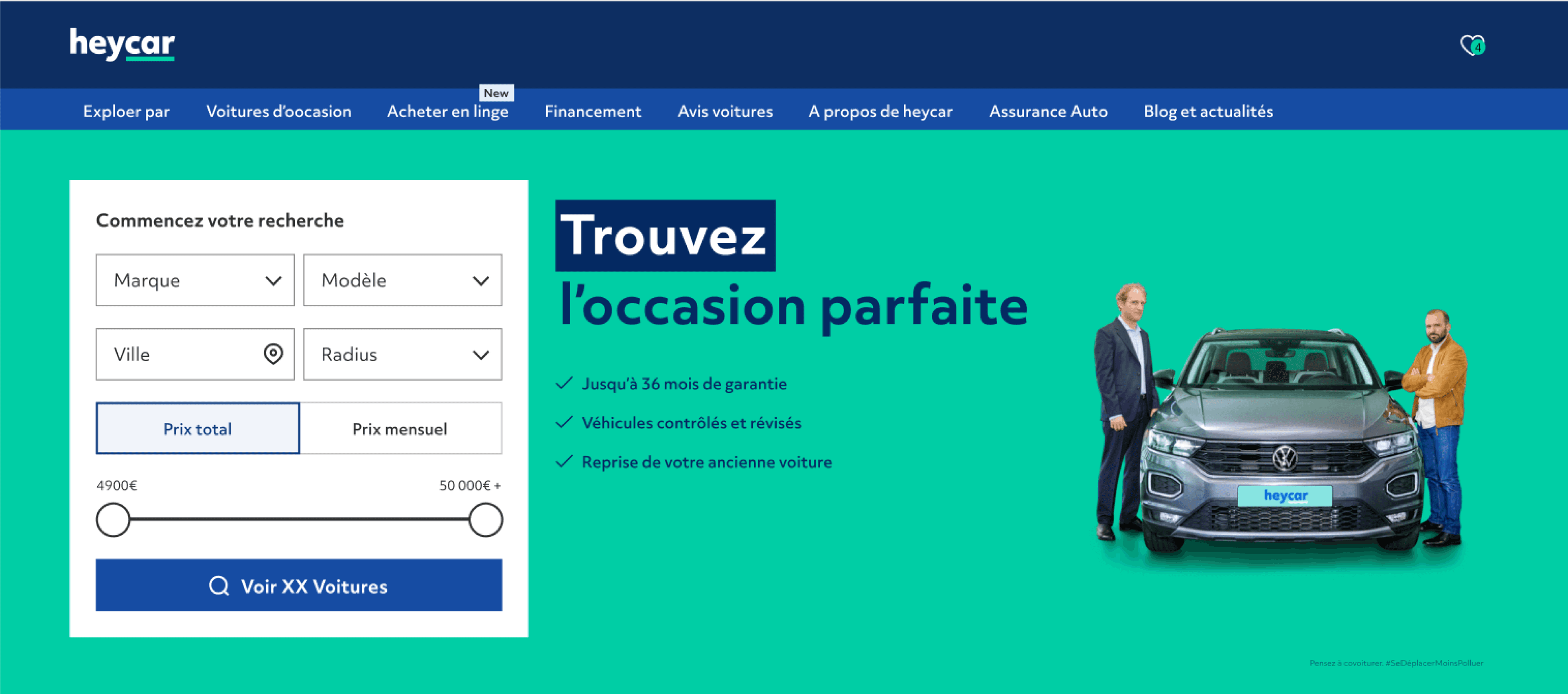
The original homepage search box contained multiple filters. The hypothesis behind this design was that allowing users to refine their search upfront would help them land on more detailed and relevant results.
However, after conducting user interviews and reviewing analytics, we discovered a different reality.
Not all users used all filters. In fact, most ignored them.
The number of decisions required at the beginning of the journey created friction. Users were confronted with too many options before even seeing a single car.
Analytics showed significant drop-offs on the homepage, confirming that the detailed search was not helping users move forward.
When we asked users what mattered most at the start of their journey, their answers were consistent:
The make
The model
Whether the car was available near them
Everything else could wait.
Challenges:
Redesigning the homepage search was not just about removing filters. It required careful balance.
We needed to simplify the entry point without reducing the overall depth of the platform.
The main challenges were:
Reducing cognitive load while maintaining powerful search capabilities
Ensuring users could still access advanced filters when needed
Aligning stakeholders who initially believed more filters meant better results
Avoiding oversimplification that could frustrate power users
The question was not what to remove, but when complexity should appear in the journey.
To address this friction, we defined clear objectives for the redesign:
Increase the number of users initiating a search from the homepage
Reduce homepage drop-off rates
Simplify the decision-making process at the start of the journey
Preserve advanced filtering capabilities without overwhelming first-time users
The goal was not to remove functionality, but to reposition it more strategically within the user journey.
As the product designer on this initiative, I partnered closely with the Product Manager to understand user behavior and validate assumptions. Together, we conducted user interviews and analyzed analytics data to identify the root causes of homepage drop-offs. I translated these insights into design hypotheses and developed simplified search concepts.
I was responsible for:
Redesigning the homepage search experience
Simplifying the information hierarchy
Prototyping and validating interaction flows
Preparing final UI designs and documentation
I collaborated closely with developers during handoff to ensure the final implementation reflected the intended user experience and interaction details.
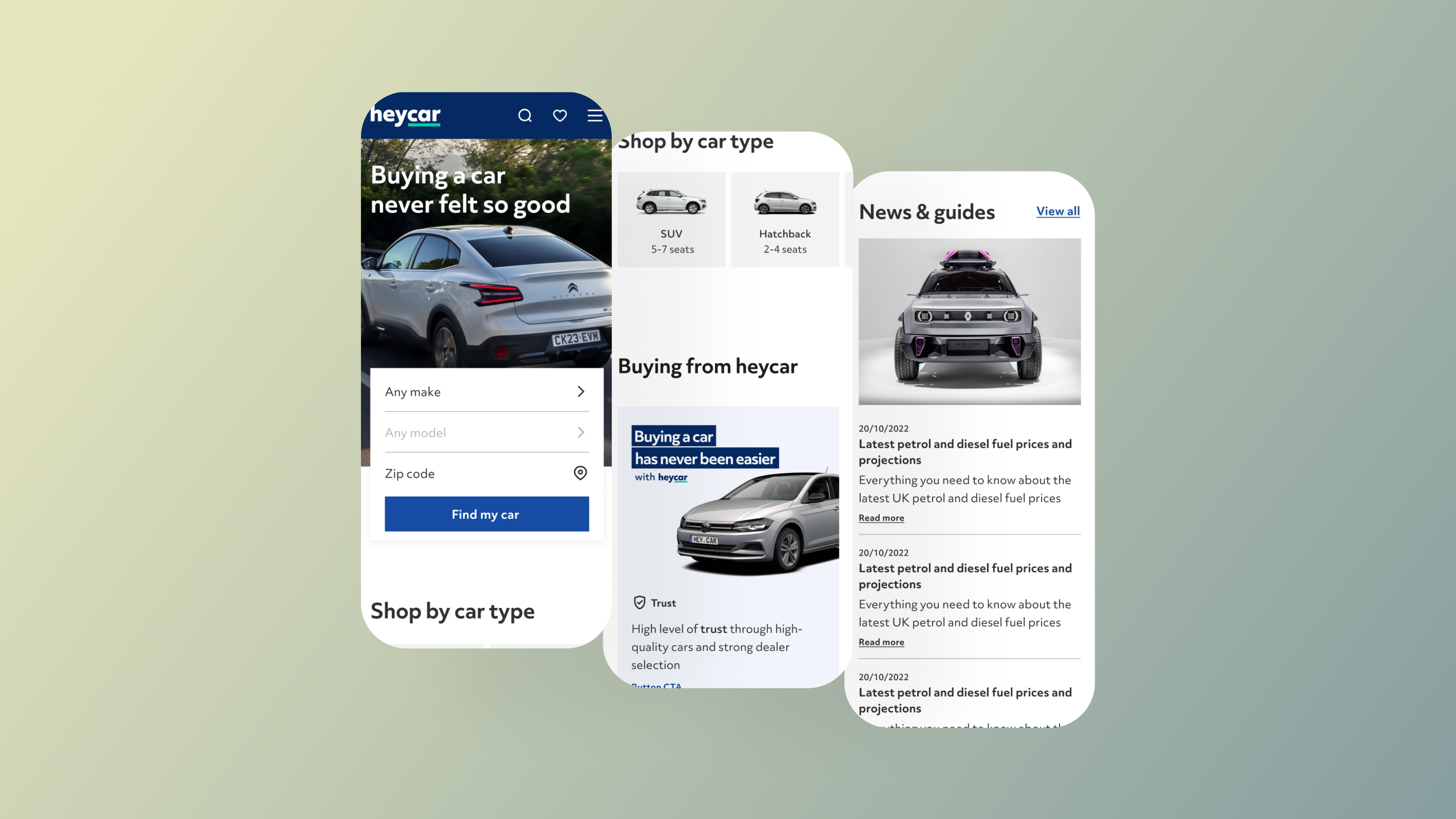
Before diving deeper into the design process, here is a link to Figma, in case you are interested in seeing more screens
We approached the redesign iteratively, grounding decisions in research rather than assumptions.
1. Defining the Simplification Strategy
Based on interviews and analytics, we identified the three inputs that mattered most at the beginning of the journey:
Make
Model
Postal code
We reframed the homepage search around these essentials. The goal was to reduce the number of decisions required before users could see results.
2. Concept Exploration and Prototyping
I created multiple low-fidelity concepts exploring different levels of simplification. Some versions reduced the number of filters gradually, while others removed them entirely.
Through internal reviews and quick validation sessions, we evaluated:
Visual hierarchy and clarity
Perceived effort to start a search
Balance between simplicity and control
The three-field version consistently felt lighter, faster, and more approachable.
3. Interaction & Hierarchy Refinement
Once the direction was clear, I refined:
Input structure and field order
Visual prominence of the search action
Spacing and typography to reduce visual noise
The search bar became the visual anchor of the homepage, clearly signalling the primary action.
4. Preserving Depth in the Right Place
Instead of eliminating advanced filters entirely, we repositioned them to the results page.
This ensured that:
Users could start quickly
Power users still had access to detailed filtering
Complexity appeared at the moment it became relevant
We shifted depth to the right stage of the journey.
The search bar Before:
Make
Model
City
Radius
Total price or Monthly price toggle
After:
Make
Model
Zip code
And let the search begin!

Outcome
The simplified search experience reduced friction and increased engagement.
Users were more likely to initiate a search and continue exploring listings. Drop-offs on the homepage decreased, and the transition from landing to results became smoother.
By removing complexity rather than adding more features, we created a clearer and more effective starting point.
What we learned:
Progressive disclosure improves momentum: Users are more likely to move forward when complexity is introduced gradually rather than all at once.
Clarity outperforms comprehensiveness at the entry point: Providing every possible option can feel thorough, but it often slows decision-making.
Strategic alignment matters as much as design execution: Simplifying the search required stakeholder alignment. Removing filters challenged the assumption that more control equals better experience.
Next Steps:
Continue refining AI accuracy based on real-world broker interactions.
Optimize OCR speed to further reduce form completion time.
Educate brokers on best practices for using OCR to ensure smooth adoption.
This project reminded me that simplifying an experience often requires the most discipline. Removing filters initially felt counterintuitive, but user research showed that clarity at the beginning of the journey mattered more than completeness. By focusing on what users needed in that first moment, we created a smoother path toward discovery while preserving the depth of the platform where it mattered most.
© 2026 Nasim Raeesi