
Smoobu is a vacation rental management platform that allows property owners to manage listings across multiple booking platforms such as Airbnb, Booking.com, and Expedia.
The platform helps hosts centralize their operations by synchronizing bookings, calendars, pricing, and guest communication across channels.
However, as the product evolved, the experience became increasingly complex. Users struggled to navigate the interface, and analytics revealed high drop-off rates across several key pages.
The goal of this project was to redesign the platform experience from the ground up. By improving both the UI and UX, we aimed to simplify workflows, increase clarity, and help property owners manage their rentals with greater confidence.
I joined the project as a Product Designer and worked closely with a cross-functional team that included product designers, developers, and a product owner. Throughout the project, I collaborated closely with engineers to ensure that the redesigned experience could be implemented effectively.
Conducting research and synthesizing user insights
Defining personas and user journeys
Identifying usability issues and prioritizing improvements
Designing new workflows and interface patterns
Establishing a design system to improve visual consistency
Creating prototypes and preparing design handoffs for development
Figma
Miro
Industry data from Statista
Captera reviews (users's feedback)
Hotjar
Google Analytics
At the beginning of the project, we focused on understanding how property owners used the platform and where they encountered friction.
Direct user interviews were difficult to conduct at scale, so we worked closely with our customer support specialists. These teams interacted with users daily and provided valuable insight into recurring issues.
Support teams from several regions participated, including France, Germany, Greece, Italy, Spain, and English-speaking markets. Their feedback helped us identify patterns across different user groups.
To complement these insights, we analyzed additional sources of data, including:
Google Analytics for behavioral insights
Hotjar session recordings and heatmaps
User feedback from Captera reviews
Pre-signup survey data that captured user motivations and goals
Industry data from Statista
These sources helped us build a clearer picture of user needs and frustrations.
Personas:
Based on our research, we created three personas representing the primary types of users on the platform.
Each persona included information about:
Demographics
Motivations and goals
Devices and technical comfort
Budget and scale of operations
Key frustrations when managing rental properties
These personas helped align the team around the people we were designing for.
We reviewed them with stakeholders and incorporated feedback from multiple departments before finalizing them. Once validated, they became a reference point throughout the project.
Design decisions were evaluated against these personas to ensure that the solutions addressed real user needs.
Property owners often list their properties across multiple booking platforms. To avoid double bookings and maintain accurate availability, they rely on tools like Smoobu to synchronize calendars and manage reservations.
However, the existing experience introduced several challenges.
Users needed to connect multiple booking platforms individually, configure settings across several pages, and navigate a complex interface before they could start managing their bookings effectively. This process was time-consuming and often confusing for new users. Analytics revealed that many users were leaving the platform before fully setting up their accounts or exploring its capabilities.
Despite ongoing marketing campaigns aimed at increasing conversions, the product experience itself was creating friction.
Improving usability became essential.
By analyzing user behavior and exit rates across the platform, we identified the pages where users most frequently abandoned their sessions.
The pages with the highest exit rates were:
Cockpit (AKA Dashboard)
Prices
Statistics
Messages
Booking details
This insight helped us prioritize the redesign effort.
Rather than attempting to redesign everything at once, we created a roadmap focused on improving the highest-impact areas first.
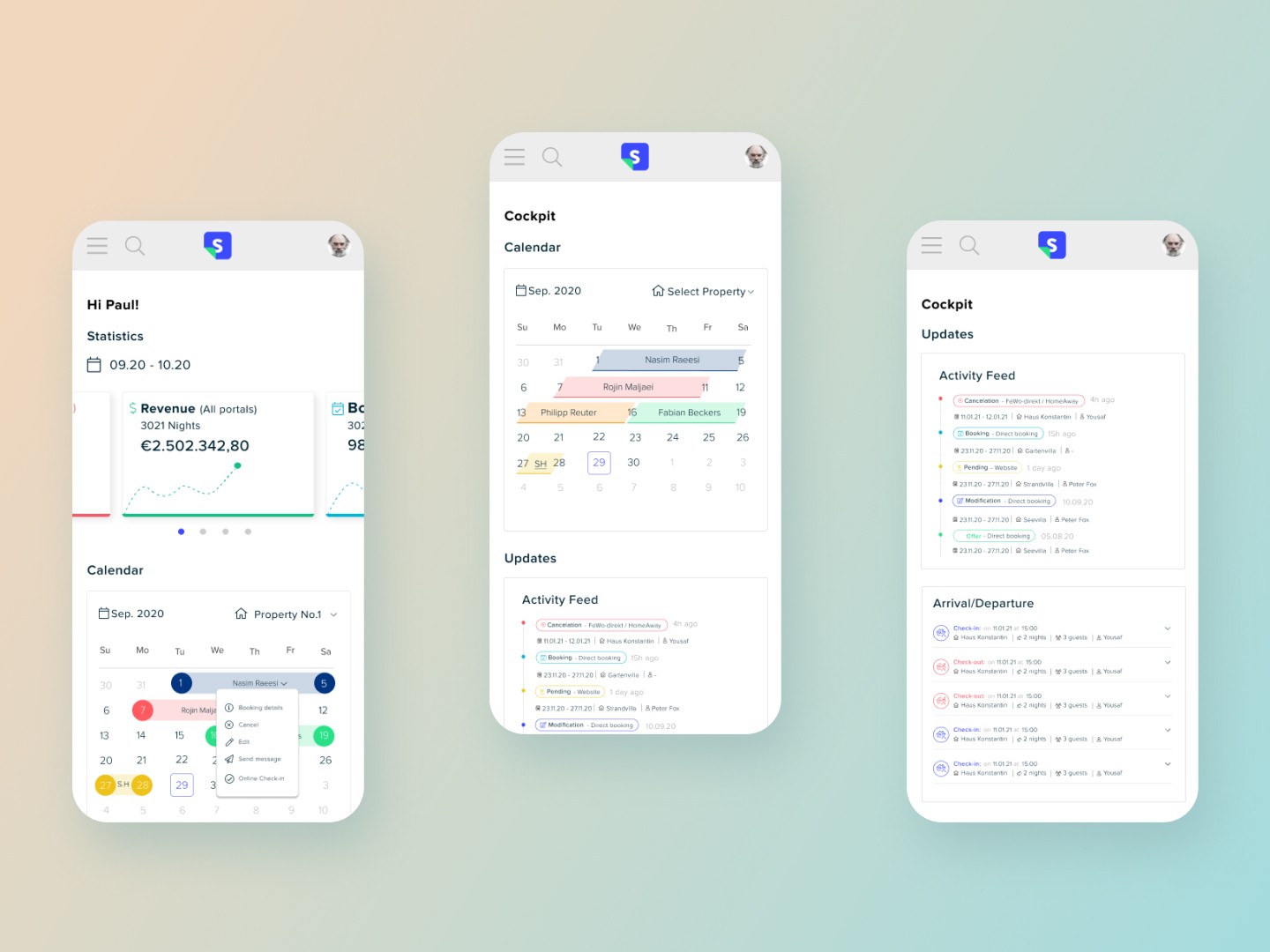
Improving the First Experience
One of the first initiatives was introducing an onboarding experience. New users previously landed on an empty dashboard, which made it difficult to understand how the platform worked.
The onboarding flow guided users through key setup steps, such as connecting at least one booking platform.
This ensured that users arrived at a dashboard with real data and could immediately see the value of the product.
Redesigning High Exit Pages
Next, we focused on the pages with the highest exit rates.
We analyzed each page individually to understand how users interacted with it and where friction occurred.
This led to improvements in:
Information hierarchy
Workflow clarity
Feature discoverability
Visual organization
The goal was to make common tasks easier to complete and reduce confusion across the interface.
Establishing a Design System
During the redesign process, we discovered that the platform lacked visual consistency. Different components followed different styles, which made the interface feel fragmented.
To address this, we created a design system that defined:
Color usage and visual hierarchy
Component behavior and interaction patterns
Consistent spacing and layout structures
We also refined the product’s color palette. Slight adjustments made it easier to distinguish calls to action and improved overall readability.
Lighter color tones were introduced to create a calmer interface that felt easier to use over long periods of time. This system helped align design decisions across the platform and simplified collaboration with developers.
Outcome
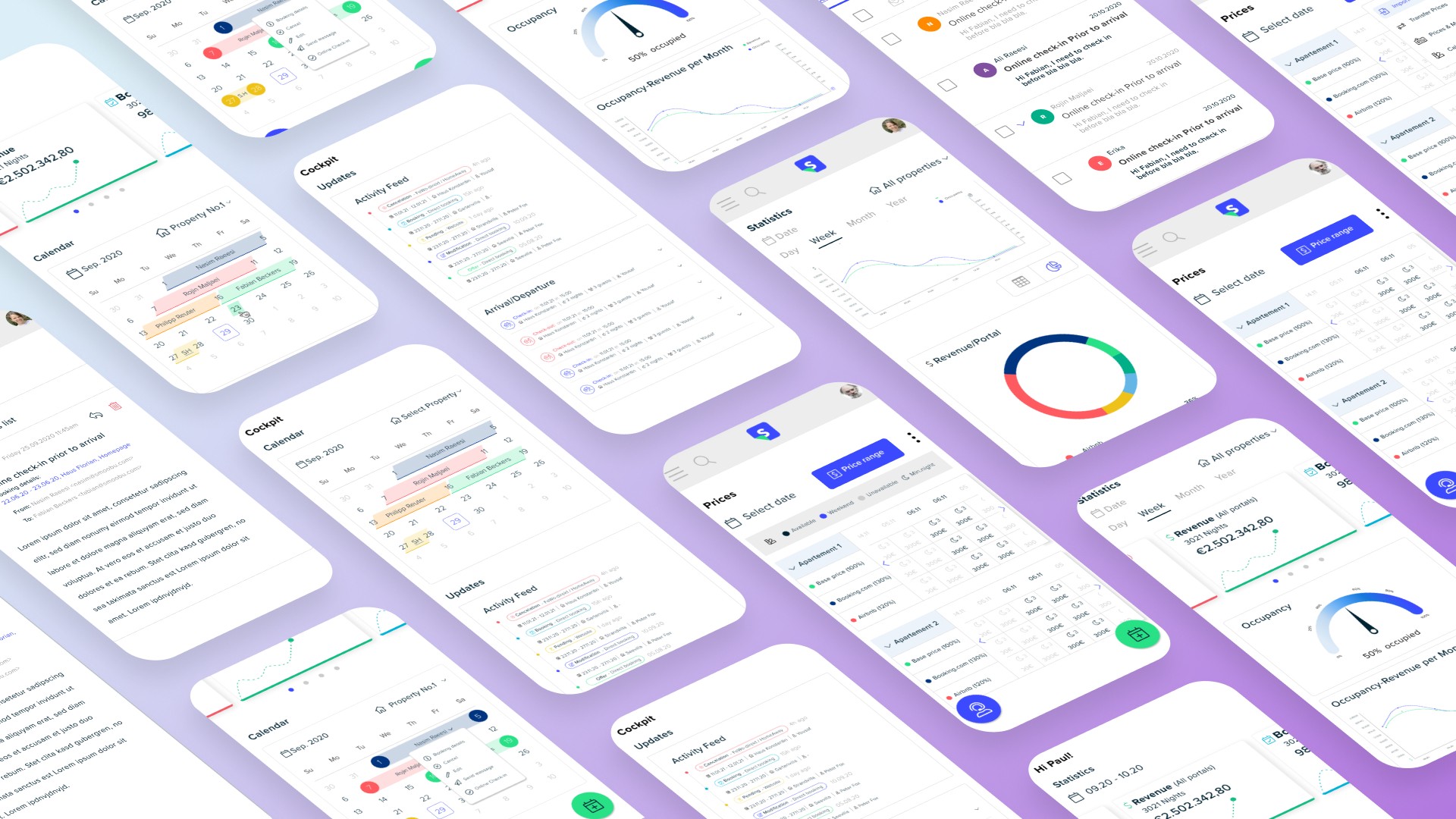
The redesigned experience improved clarity and consistency across the platform.
By addressing high-exit pages and simplifying onboarding, we helped new users understand how to start using the product more quickly.
The introduction of a design system also created a stronger foundation for future product development, allowing the team to design and implement new features more efficiently.
This project reinforced how closely product usability and business outcomes are connected.
Marketing efforts alone cannot compensate for friction in the product experience. Improving the interface and simplifying workflows had a direct impact on how users perceived the platform.
It also highlighted the importance of working with the resources available. Even without direct access to users, insights from customer support teams, analytics data, and user reviews helped us identify meaningful opportunities for improvement.
By combining these perspectives, we were able to redesign the platform in a way that better supported the needs of property owners managing their rentals.
© 2026 Nasim Raeesi